
| Search PNC News for stories of people and churches in our UCC Conference: |
|---|
Youth workshop raises ideas for drawing youth
Va’a Alaelua, pastor of Christian Worship Center in Anchorage and an organizer of youth participation in the 2026 Annual Meeting in Seattle, opened a workshop on youth and young adults, saying, “Young people are not just the future of the church but are an important part of the church right now.”
|
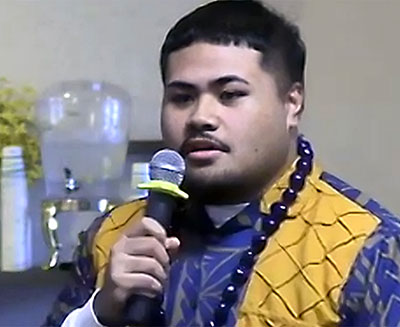
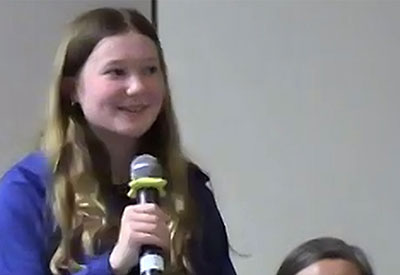
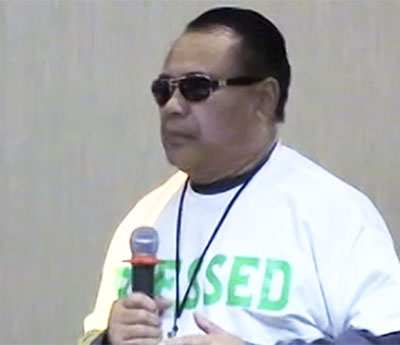
Va’a Aleluia, top, of Christian Worship Center in Anchorage facilitated discussion for the youth workshop, including comments by Ishmael Togi, center, and a youth from Fauntleroy, third and bottom, Pastor Fili Togi of Ala I Le Ola, told how he built the youth program. |
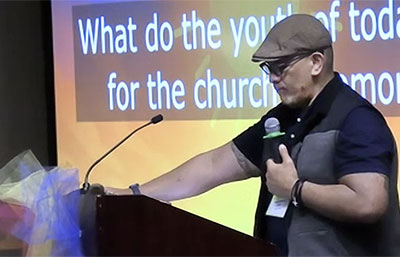
He opened the workshop with reference to the biblical story of Josiah, a young king who “was just a kid when he became a king. He saw things that were broken and didn’t wait until he was a grown up to fix them. He stood up and he changed his world.”
Va’a invited workshop participants to share their voices, dreams and goals for the PNC-UCC
“What brings you? What bores you? How can we make things better together?” he posed as discussion questions, also inviting parents to speak. “We want to know how we can move forward as a church that’s inclusive.”
He encouraged that the workshop be a safe space to share concerns and make plans.
“Your voice matters today,” he challenged youth. “Are you ready to rise and make a difference.
“Worship is based on movement and we worship God this way,” Va’a said.
“We honor the younger generation. We honor our parents as well,” he added.
“In my Samoan culture, youth voices are usually not in the conversation. Today, let us honor the young generation who will take over as we plant the seeds in their generation” he said.
Va’a opened conversation with recognition that many kids tell him he is boring, so he tries to speak in a more Pentecostal way, as long as the gospel message gets to them and connects then to God and the church community.
“What do the youth of today want for the church of tomorrow?” he asked.
The first youth to speak said that the church needs to be like a park where “we can have fun and fellowship.”
Va’a said some Samoan pastors try to speak English, and use both languages, so youth understand the message in multilingual communities.
A girl from Fauntleroy said to have a youth worship is not interesting. “We need to make sure youth understand what’s in worship so they hear the gospel and engage in conversation.”
Va’a said his church involves youth through dancing and singing.
When one person expressed concern to involve youth at Annual Meeting beyond entertaining, Va’a explained that “this is the way we worship and create ways to engage youth. As Samoan born and raised in America, I’m a minority. In Samoa, I’m a half breed, a second class citizen.”
Ishmael Togi of Ala I Le Ola Church #5 in Seattle, wants more youth representatives on church and PNC boards.
“In my church, few people in leadership are under 30 or under 20. In Matt. 18:1-4, when disciples asked Jesus who greatest, he called a little child and said, “Unless you become like little children, you will not enter kingdom. Whoever welcomes a child welcomes me.”
“In most churches, we put older people in leadership, assuming they have more wisdom, but we need the innocence of child to get in heaven. That’s why youth leadership is important. As people grow older, they may be corrupted to ways of the world,” Ishmael said. “We invite youth to take leadership in church to bring more perspectives. We need to be open to hear perspectives of young children and invite them to speak in board and church meetings.”
Va’a asked: “Is PNC-UCC willing to listen and open its doors?”
A Seattle pastor suggested the challenge of representation is clear and important to hear. It includes meeting when young people are not at work or in school. It includes making space for young people and realizing that when they come, youth may not know Roberts rules of order.
“We need to trust in young people as way to trust in God,” she said.
A retired UCC pastor asked how to break through to initiate a conversation with young people who are caught up in their tech communication.
A girl from Anchorage, told of four youth gatherings her church had and that she had “never had seen so many Polynesian youth.” Growing up in a church grounded in tradition where youth were looked down on and not allowed to speak, she is now vice president of the church youth.
“Let youth know that their voices matter,” she said.
Tevita Fakasiieiki, a member of Westminster UCC in Spokane and represents young adults on the PNC-UCC Board, said that in Tonga, “women make a tapa bark cloth, like the Samoan siapo. The point is not the end product but the process of making it—building relationships and community. When I came on the board, it challenged me to do better. Now on the board for four years, I see a strong and growing youth and young adult presence. We need to build relationships between elders and young, so we have both the wisdom and ummph of God.”
A young woman from Seattle Samoan Church II said that with youth immersed in technology, churches need to be savvy in tech and tiktok. They need to livestream services and have it done with quality for those work night shifts. She challenged Pacific Islander churches to align with technological advances and hopes the PNC-UCC can help with that.
John Eisenhauer, who was on the Annual Meeting tech team, offered that he consults with churches on tech and helps them find funds to do quality livestream.
Va’a then asked, “What challenges do you see in the church today as a youth? and What keeps young from wanting to be involved?”
A participant from Alki UCC said its youth group has grown steadily over the years and it continues to offer opportunities to be engaged and intergenerational connection. There are adult mentors for youth in confirmation.
One youth in a group of six said some come because their parents make them come. She wants more to come because they are interested.
A girl at First Congregational Bellingham is one of two kids in youth group, looking for ways to engage more youth.
Ishmael said that when his father, Fili Togi, was called as pastor of Ala I Le Ola Church in 2022, there were seven or eight youth. Now there are 40 to 50. We have youth outings, like bowling and skating, and invite other kids to come. When their families and friends come, they build relationships. They invite friends from school and other churches. Our youth fellowship is not just for our church. We allow others to come and grow organically.
“We need to remember that we are not individual churches in the UCC. We need to lean on one another. A church with two youth can get together with a church with seven and work together,” Ismael said. “We need to be inclusive and inviting.”
His father, Pastor Fili Togi, then commented: “I love to see different people come together. What happens when we come together despite differences in colors, cultures and languages? God created our hearts. If we have a brown heart or a white heart, it is God’s heart. That is the beauty of this conference. The base of our relationship is love. Love never changes.
“Show that you love God,” he advised. “Kids are looking for a place to come that has love. When find place that loves, they stay there. We need that in these days. May the Lord be with our leaders to provide wisdom to come up with ideas to fulfill dream. It is sad to look at news and watch TV. We need love. God’s mission for us is to love.”
A parent from Everett UCC recognized that parents need to connect with kids and be good examples by going to church every Sunday, loving each other and connecting with their community.
A Samoan parent told of feeling left out as a kid and makes sure to invite youth to help. “Some youth struggle to understand how to connect to God in school with friends who have problems. They also struggle with questions on faith and doubt. Youth need strong mentors.”
Va’a asked: “How can we help to raise youth voices?”
Phil Hodson, designated conference minister, then offered some observations.
He told of serving a church where the youth sat in the back bored. When he asked why they came, some said, “My grandmother makes me come.”
He asked each to bring a friend at 6 p.m. Sunday for two months. He asked elders for money for pizza and soda. The first Sunday there was more than nine could eat.
“For the first hour, we talked about God and next hour ran anywhere in building and played,” Phil said. “Nine turned to 22, because we gave youth a safe space to come and be kids.
He also suggested connecting kids with PNC-UCC camps, noting scholarships are available. Churches with no youth can raise money to empoßwer youth by sending them to camp.
“We need also money for tech,” he added.
What is the goal of the Gospel? I hear Jesus and love, but to have those we need fellowship and relationships, which are alive and well in this room,” he said.
Å He invited adults to find resources to create safe and fun spaces.
“Every board member can mentor the next generation, pouring into them wisdom and experience to empower them to lead. It will change the shape of church. These are things we can and must do,” Phil said. “Faith exists to be interpreted by each generation that receives it. Faith not static. It’s ever growing. Meet each generation where they are. Where they are is already is where God is showing up.
“You are the church. I see the future of the church is bright, strong and now. Pour out your spirit over those who have come. Come and be with them and us in relationship as we go out into an uncertain world,” he said.
“We need to build bridges for a church filled with hope and knowledge to pass on to next generation by being mentors to walk beside youth as partners on the journey,” Phil concluded.
Pacific Northwest Conference United Church of Christ News © April 2026
Share this article on your favorite social media 